
The Definition of a ‘Shmup’
The Shoot-’em-up genre, also known as Shmup for short, is gaming in all its simplicity. You control an object, usually a jet or spaceship. And if you play a Japanese one, fairies or half-naked women. You move up, down, left or right. You push a button to shoot bullets at enemies. At the same time, you try to dodge their projectiles, either in a horizontal or vertical view. The difficulty level is usually high, though there are plenty of exceptions. A lot of Shmups set you back at the beginning of a stage once you get hit a single time. Others are more forgiving and will let you continue, or give extra lives if you do well. It’s considered overall to be a very hard genre, and mainly reserved for hardcore gamers.
Originally, Shmups were designed to be played on cabinets and those were found in various Arcade Halls. Cabinets were also placed in public areas and they would often stop working because they were overflowing with coins. Space Invaders, apparently, caused a nation-wide shortage in Japan in the ’70’s, although some people dispute that claim. In time, many Shmups were ported over to home consoles. Ports were available for the NES, SNES & NEOGEO (among others) and that is how I experienced most of them. The point of an Arcade Hall was, of course, to maximize profits (there’s a little business 101 for you), but with a Shmup, this strategy seemed exceptionally devious. Developers, mainly from Japan, would excel at this.
Consider an average Shmup: five stages, three player-controlled ships, each a different bullet pattern. Bombs for emergency, to clear a screen. Three hits: “insert another credit”. If you finished a game, you could restart it. Usually with a higher difficulty. This was called a ‘loop‘. More ‘loops‘ made it possible to continue after beating the game and go for the record high score. But beating it once was already hard enough. Usually, the first half of the game was a cake-walk – a strategy to lure you in. Then, on the last stage, the difficulty dramatically increased to insane levels. They suddenly changed their approach. They no longer let you continue after dying. Instead, they forced you to start the stage over from scratch every single time (looking at you, Psikyo). Sometimes, the first four stages were 15 minutes of play-time combined. But then, the last stage was 15 minutes in and of itself. And by then you had already spent 30 coins. You had to beat it now. Waste more coins than you’d really want. Not that you wouldn’t want to waste every coin as a child lost in an Arcade Hall. But you also wanted to try other games. Except, now you were too far into this one. I’m getting flashbacks of Time Crisis II draining all my funds. But anyway – most people would agree – this is generally considered a Shmup.
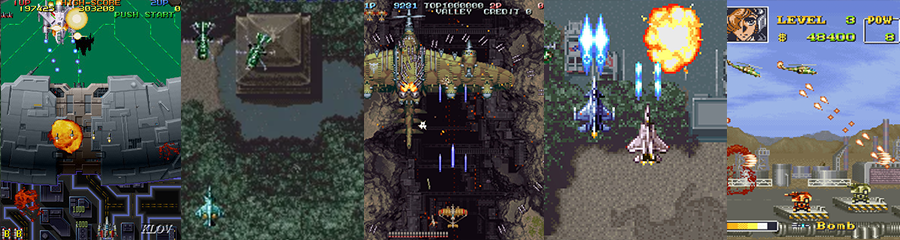
A lot of people however, consider Contra to be a Shoot-’em-up as well. This game was also released in the Arcades, before the famous NES version. It’s a game where you also shoot and dodge bullets constantly, but with platform elements. A recent game called Cuphead does the same but with a 1930’s cartoon aesthetic. But are these Shmups or Action platformers? Many people agree on the definition of what makes a “Shmup” – a game with you in a ship, dodging tons of bullets. However, Geometry Wars is called a “twin-stick Shooter” because you use both analogue sticks. But people will also simply call this a “Shmup”. But what is it? A Shooter or a Shmup? Are the terms interchangeable whenever the view or analogue stick demands it? Is that what creates a sub-genre instead? Does it even matter? If it does, is the general consensus of the overlapping term, then, “Shmup“? I remember reading about a Japanese (Shmup) developer being upset about the term “Shmup“, considering it an insulting abbreviation. He argued for these games to be called “Shooters” instead, as that was the original term for them. Were they? It was a more ‘serious’ term apparently. Nowadays, the term “Shooter” is mainly reserved for games in the FPS genre. That is, First Person Shooter, which makes sense, as you shoot things in a First Person view. Yet some people call FPS games Shoot-’em-ups too, so, I don’t know anymore.
I think “Shmup” in and of itself, is a perfect little cute word for those hectic, bullet-dodging, quarter-suckers. There was a severe limit on ROM size in the past too, but the Shmup was quite simple. The Shmup was generally also pretty short. That meant that a developer could go the extra mile with art, design and music. Often in Shmups, the sprite work was gorgeous. The controls, smooth as butter. The music, excellent (and thumping). The genre is to this day, still quite niche. That’s why it’s a good thing, in my opinion, that a generic word like “Shooter” is not the definition. In fact, if you search for the keyword “Shmup” in a search engine, you’ll find exactly what you want. But anyway – enough about Shmup, Shmups, Shoot-’em-ups or Shooters. I want to share with you how I got into Shmups in the first place. And this was purely by accident.
The Mystery Game
My father used to watch TV all the time. He had an illness and was stuck at home more often than not. His main hobby was watching sports on TV. In the past, you bought TV guides that contained the broadcasting schedule for each network for the upcoming week. Sometimes they also had tiny little square reviews of video games in the back of those magazines. My parents knew that the only thing I wanted for my birthday was always a new Super Nintendo game. And like always, my father was navigating through the whole guide. That year, however, I didn’t have a specific game in mind that I desperately wanted. Seeing as my birthday was coming up, my father was on the lookout for a video game.
He came across a review of a game called ‘Secret of Mana‘ and showed me the guide. “Do you know anything about this game?.” I looked at the article. It had a screenshot of a top-down game with cozy graphics. A boy standing in a field with a sword. A yellow ball-like enemy that seemed to want to bite him. The color-palette tingled my senses – green trees, blue water, pink and yellow flowers and colorful characters. He saw I was interested. Secret of Mana turned out to be a total classic, of course, loved by everyone. But who knew back then? The reviewer in the TV guide gave it a perfect score. And that was exactly the game I got that year.
I knew this before my birthday came up, actually. There was a rectangular-shaped box under the Christmas tree with the exact dimensions of a Super Nintendo box. My birthday, December 17th, meant they put it under the tree, way in advance. I’m not sure how old I turned that year, I think 8. But the gift was there, lying in a Christmas basket, tempting me; begging me to open it. Like some force-field I was drawn to it. This happened every time my parents were gone and I strolled into the living room. I had to resist peeking.
Eventually though, curiosity got the better of me. I sneakily and carefully removed the sellotape off a corner of the wrapping paper. That’s when I saw it – in yellow letters: “Sec-” and I knew exactly what game it was. Coincidentally, right after this rebellious behavior, I heard my parents walk up the stairwell. We lived in an apartment on the third floor. I think they went out for groceries or something. Me, of course, excited as shit, thought it was a smart idea to greet them while they were coming up the stairs. Leaning over the railing, I said: “Ooh, you know which game I would really like? Secret of Mana!” Of course my father immediately knew what I had done and realized I was a sneaky little shit. He went over to the box right away and saw a badly reconstructed, patchy corner. He got a little upset. I acted like I didn’t do anything. But surely enough, a few days later my birthday arrived. And I ripped off the wrapping paper (slowly, to savior the moment) and surprise – it was Secret of Mana! I couldn’t wait to unwrap all the other gifts and fly over to my Super Nintendo. Getting a new game in the ’90’s was an indescribable feeling. I could not do it justice.
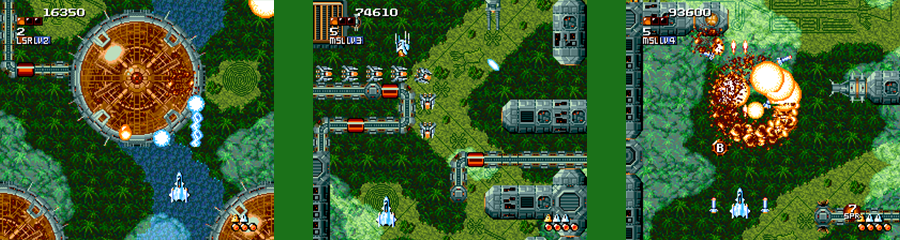
I put Secret of Mana in, and the game started. A blue screen appeared. An airplane or jet flew past and some text twirled into focus. I didn’t read it, I knew which game this was, obviously. I saw the title of the game on the box and on the cartridge sticker: Secret of Mana. Was the title on the main screen different? Whatever. I didn’t even pay attention. The first level started and I was controlling a small ship, shooting bullets, with a top down view. Man, this game was hard. I barely made it half-way the first level. A bit odd, though – it didn’t look very much like the pictures on the back of the box. On the box I clearly saw pictures of characters walking through a desert and some flying dragon. Me, being intrigued anyway, and more importantly, having a new game to play, kept on playing. Maybe this was the intro. I told myself I would land on the surface later. That’s where you had to fly towards in the beginning of the game, of course. This game just started out differently. The mental gymnastics of an 8 year old.
One thing was certain though: the graphics and music were awesome. But the game was also fast as shit. I couldn’t keep up. My tiny little brain was trying to process all these bullets and fast-moving scenery but it was lagging behind. Dying in 1 hit seemed a bit unfair too. Also, the first level felt like an eternity. Give me a break already. And after all that, I still had to beat a boss at the end of it! Well, that’s where I died. Game Over. I turned off the game. Whew… A new core experience was unlocked. I’d try again later, of course, but for now I was tapped out. A few days went by. I kept looking at the pictures of the Secret of Mana box. And I knew by now, deep inside, that this wasn’t Secret of Mana. But I didn’t want to say anything. Finally, I beat the first and second stage and proudly showed my father (who had already looked at the TV screen before multiple times, suspiciously). “This doesn’t seem like the right game” he said. “I think we’ll have to bring it back” … “No!” – I lied – “you land on the ground a few levels in”. My father wasn’t convinced.
In hindsight, it’s amusing that I never tried to notice. Initially I just blindly assumed that my cartridge was what it said on the sticker: Secret of Mana. I knew something was off, but the game was fun, so who cared? I would play it on and off for some time that followed. One day, coming home from school, my mother approached me: “We’ve traded your game in for the correct one. It had a wrong label, some factory mistake”. I had some mixed feelings about them removing one of my games. But this was immediately overruled by the wave of excitement of having a new game instead. I never reached far into that mystery game. But now I would finally play the real Secret of Mana. And, oh boy, what a game that was. Never had I played such a grand, majestic game before. It had an entire script; it had many characters, skills and abilites – it was literally an entire world! A revelation for me at the time. I was mainly used to platformers up until that point. I’m glad they traded it in behind my back. Yet, that weird spaceship / jet game stayed in the back of my head. It was a mystery for years down the line. If only I could remember what it was called.
The invention of ROMS
Years later, it came to my attention you could download and play Game Boy games on your computer. This was called emulation and the games were only a few kilobytes each, called ROMS. I couldn’t believe it. A friend of mine played all Pokémon games on my computer at the time. I didn’t care much for them. And besides, I had a Game Boy with plenty of cool games. I was playing other games at the time on a small television set my parents got for me. I still remember getting this TV. One evening my parents guided me from the living room to my bedroom. I opened the door, and on the corner of my desk was my very own small television set. My SNES was connected to it (formerly attached to the living room TV) and I’ll never forget seeing that Yogi Bear’s: Cartoon Capers title screen as I entered the room. That game was pretty hard too by the way. In any case, I’m sure my father was also pleased to see that console moved to my bedroom. But I’m getting off-track here.
Some time later, I learned that emulation also existed for NES and SNES games. The ROMS weren’t much bigger. My mind was blown, again. You mean I could play every Super Nintendo game available? I didn’t know how fast I had to get these ROMS. But I didn’t have internet at home. This was around 1999, before mainstream household internet. Back then, you would go to an Internet Cafe, where you browsed the Internet for a small fee per hour. You got assigned a computer where you could download stuff. After you were done, you paid employees to burn a CD with your files and take it all home. My mother worked at the Hilton Hotel, right in the middle of town. One of those Internet Cafe’s was right around the corner. I can tell you, the internet was fresh and exciting back then. And completely unregulated. It was the wild west. You didn’t know where to look, at least as a child. Search engines started emerging, and there were many of them. The likes of Google were not set in stone yet. Most of my time was spent looking for Dragonball Z images and other stuff I was into at the time. I also searched for video game music, but all I found was usually in MIDI format, to my great disappointment. Music in general was hard to find. This was before I knew about Napster. Last but not least, of course, there were the ROMS. A few websites had a whole list of those precious video game ROMS. 1 + 1 = 2, for I knew how to use an emulator by now, and I was about to experience the SNES library at home, on my computer.
Of course, it didn’t take long for me to remember that particular game. I knew the game had a blue title screen with some jet or airplane or space ship. And for every ROM downloaded, I checked the intro for about 10 seconds before moving on to the next. Eventually, a ROM started and a voice was heard: “PRESENTED BY TOHO“. I knew instantly, this was it. That little sound clip, a forgotten memory from all those years ago. A blue screen with a jet flew by. This was it. Then the title followed (and I made sure to pay attention this time): “Super Aleste“. There it was. I finally found it. This weird, difficult shooting game with the awesome music. The first level started and it all came back to me. The music, honey to my ears. Specific sound-effects, like the one after you killed a big enemy – DRRRSH! – exactly how I remembered it. It was a bomb of nostalgic proportions and propelled me back to that day I first laid eyes on it. I would learn quickly that this was called a “Shoot-’em-up‘ and my curiosity was peaked forever. Years later I found a copy of Super Aleste, also known as Space Megaforce in the US, and that cartridge is still in my possession to this day.
Things really took a turn once I got Ikaruga for the GameCube. That really set my love for the genre into full gear. There was also MAME, known as the Multi Arcade Machine Emulator and it emulated Arcade cabinets. Well, let’s just say I played plenty on MAME and most of those games were Shmups. I played a lot of them on the Xbox 360 too. For some reason it was a surprisingly rich console for the genre. Which was a bit odd, as the console had a low adaptation in Japan. For a country where the Shmup dominated it had a staggering amount of Shmup releases. But when it came to Shmup releases, living in Europe – usually – meant you were out of luck.
The vast abyss of the Shmup library
It’s a certainty that there are several thousand Shmup games across all platforms and time periods. These range from classic top-down and side-scrolling titles to modern indie releases. There isn’t a comprehensive count readily available. The genre remains active, with new games continuing to be developed. Throughout the years, I’ve played plenty of Shmups. I guess considering the vast library, it’s a ‘small’ portion. It’s still dozens upon dozens, though. Condensing these to some “best of” list is impossible for me. Instead, I’m choosing five Shmups that made a lasting impression on me, and personally deepened my love for the genre.
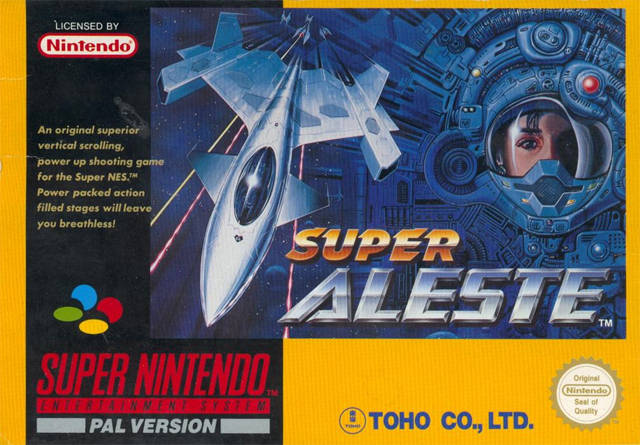
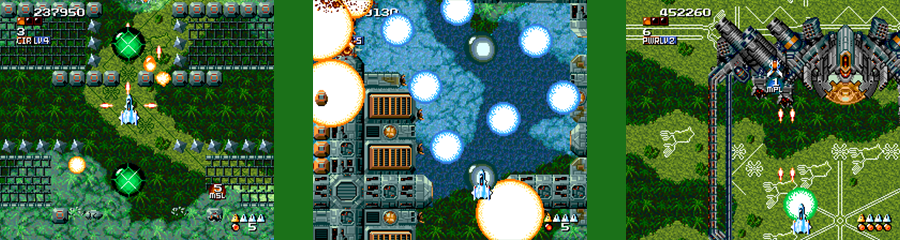
#1: Super Aleste. My real introduction to the genre. Developed by Compile, Japan. Starting with this one is a no-brainer for me. I had played Space Invaders and other single-screen “Shmups” before. But this was the first time I had fast-scrolling backgrounds, kicking tunes and high octane action. Super Aleste, all things considered, is actually one of the easier Shmup entries. It provides a very wide arsenal of weapons. It has a very fair hit-box. By that, I mean the actual area of your ship where you can get hit. In fact, the hit-box can be way smaller than your ship. Something that is especially true in the “Bullet Hell” sub-genre, which we’ll talk about in a moment. The game is also very generous with upgrades. By collecting, what look like yellow or green eggs, you can increase the output of your weaponry. Other than just upgrading your current weapon, you can also replace it. You pick up a weapon orbs that range from a number 1 through 8. Each one replaces your current weapon with something completely different. Watching the variation of all those weapon-patterns is very satisfying. Observing the increasingly larger size of these as you collect the upgrades adds to the satisfaction. And once you get hit and lose it all, you feel it.
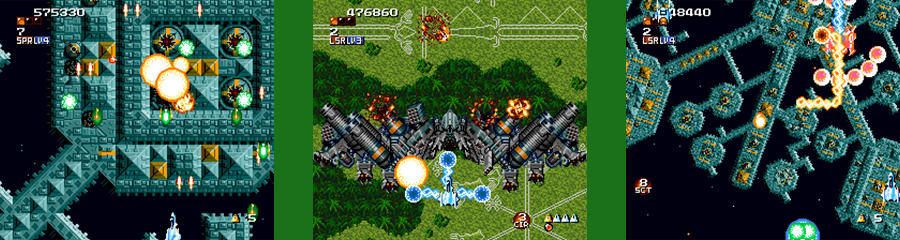
By the time I bought the cartridge, I had already become more familiar with the genre. I had played some of the more difficult ones. Super Aleste seemed to be a breeze now. In fact, I finished it in one sitting. It was quite a long game too, for genre standards. It takes about an hour if you choose the ‘long’ game. You can also choose ‘short’, which cuts the game down a few levels. Most Shmups don’t take longer than 20 to 30 minutes. This game is also very fair. It has plenty of stages. It boasts great graphics. The scenery is mostly space, but it has some cool MODE 7 backgrounds. That is a technique that the Super Nintendo’s graphics chip could do: scroll and zoom big images. Finally, the game has a great, memorable soundtrack. All in all, if you want a perfect introduction to the genre, start with Super Aleste. It has got you covered completely.
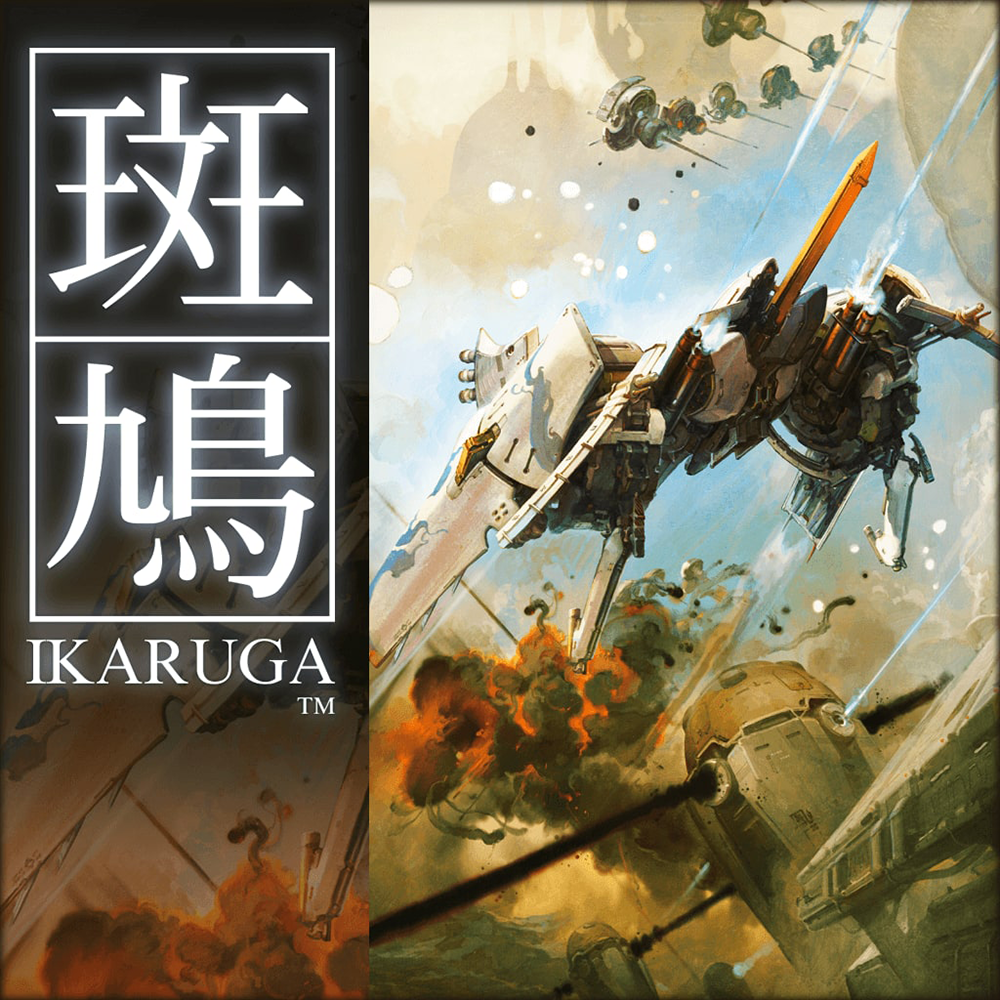
#2: Ikaruga was a game developed by Treasure, a company well-loved in the genre. (Yet, they also made Wario World for some reason.) Ikaruga originally came out on the Dreamcast and later got a GameCube port. I specifically went all the way to another city to buy this game. At the full retail price of 65 euro. They knew exactly what they had. This might seem like a lot of money for a Shmup. After all, it’s just a 30 minute game. But the thing you learn with Shmups, is that length doesn’t matter (that’s what she said.) The NES already taught me that. With its Capcom platformers like Chip and Dale and Duck Tales, you get infinite replayability. If a game is good, you will replay it 50 times. Isn’t it more fun to get really good at a game anyway?
I saw screenshots of Ikaruga on Gamespot. It reminded me of Super Aleste, so I had to try it out. Ikaruga is widely considered a classic of the genre. It features a dual color mechanic with black and white colors. With the press of a button, you can change your ship color. Choose either black to soak up black bullets, or white to soak up white bullets. If you soak up bullets, a counter starts running, which, once filled, unleashes a devastating attack. On top of this, there is a Combo-chain mechanic for advanced players. This is the real meat of the game. A Combo counts for 3 black or 3 white killed enemies in a row. So killing 6 white enemies, gives you a combo of 2. Hitting a black one is accepted. If you do, make sure to shoot another 2 black ones. This fills up the Combo of 3. Otherwise, you lose the entire combo.
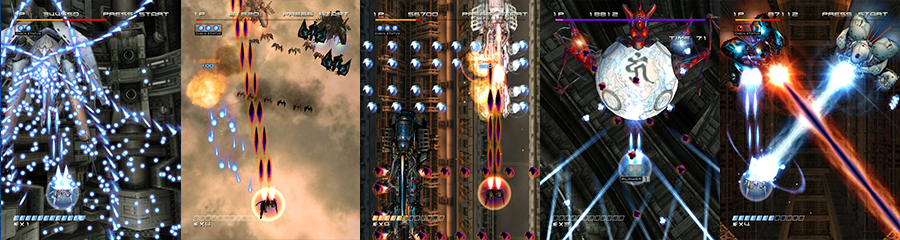
You’ll spend a lot of time and effort navigating these difficult stages. You have to search for ways to maximize this Combo-of-3 to get a better ranking. Your rank can reach all the way up to the illustrious S++ rank. This requires flawless execution. It also demands supreme knowledge about the layout of each of the 5 stages. I remember this game kicking my ass, and I was about to give up. Then, one night, when I was very sick and couldn’t sleep, I turned on Ikaruga. I finished it twice in a row. That’s what kick-started my addiction to this game. It has a depth most Shmups can only dream of. I would definitely recommend this as another Shmup to try out.
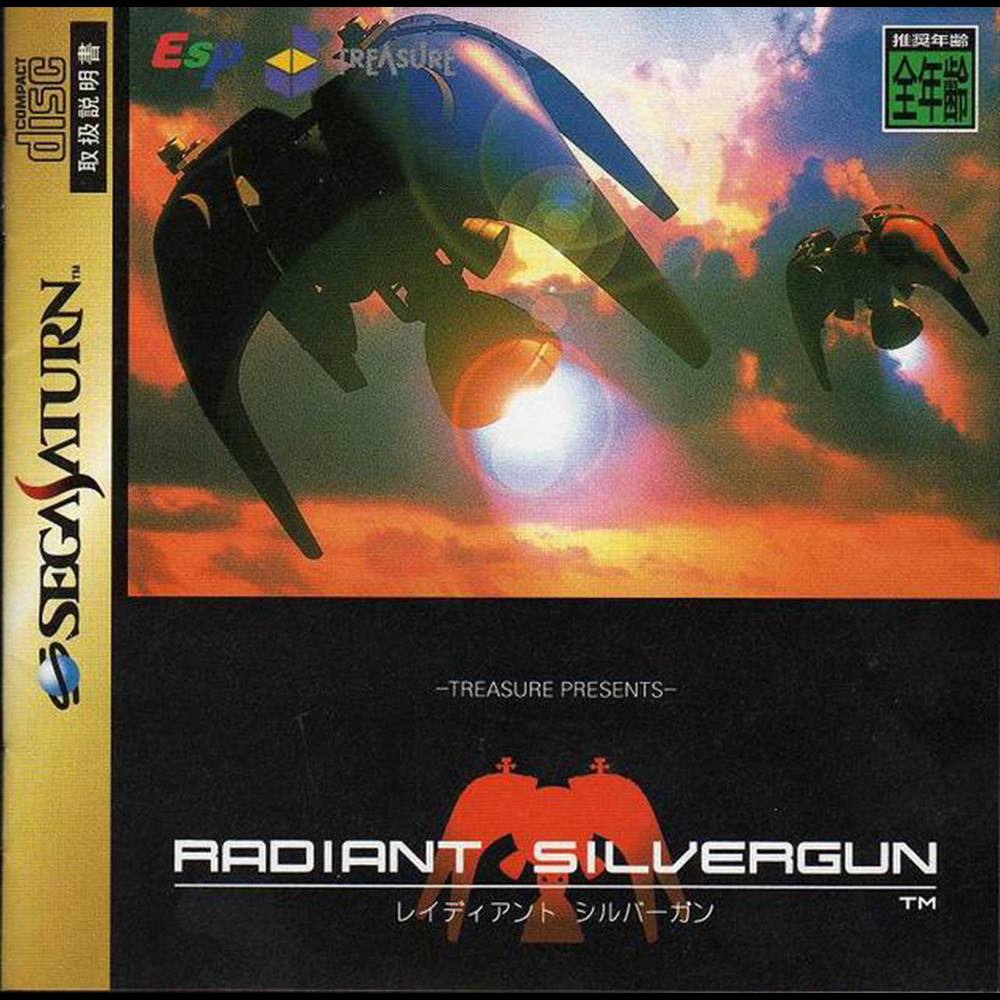
#3: Radiant Silvergun – another Shmup developed by Treasure. It was a Shmup that came out in the Arcades and on the Sega Saturn. I played it for the first time on the Xbox 360 Live Arcade. At that time, I didn’t have a Sega Saturn yet. This was their Shmup before Ikaruga. The main element of this game is the variety of all the weapons you possess. You have all of them right from the get-go, which immediately offers an immense amount of freedom. This also includes a giant sword. To get anywhere at all, you need to use certain weapons at certain key points for maximum efficiency. The sword swings diagonally-opposite of your movement. It is dangerous for close range encounters but can do massive damage. It can also absorb bullets. The game almost feels like a Boss Rush, with many varied boss fights, and all with tons of varied patterns. The graphics are in 3-D and really give off that nice, early 2-D / 3-D transitional vibe. If you’re older than 30, you’ll know exactly what I’m talking about.
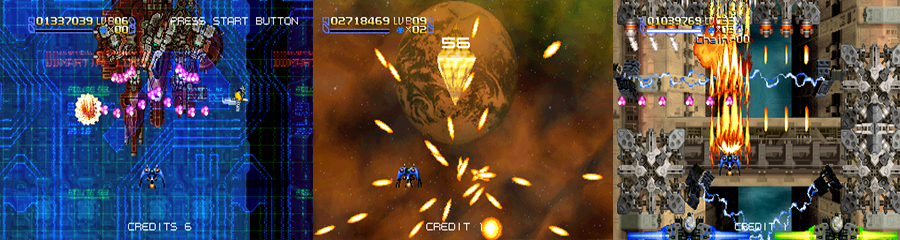
The game requires a lot of patience in figuring out how to navigate its enormous levels. Eventually, I felt the joy of progressing one stage further each time. I saw my weapon strategies improve more and more. It was tremendously satisfying. Every time you died, you kept the experience you built up. This applies at least on the Live Arcade version, in the form of weapon levels. I’m pretty sure it was the same on the Saturn. The more you use them, the stronger they get. More credits are unlocked each time you die or as time progresses. In all actuality, in time, the game gets easier for multiple reasons. You either get more credits. Or you have more brute force power because of the leveling mechanic. Or you just get better at compiling a good strategy. It was a smart way to design a Shmup.
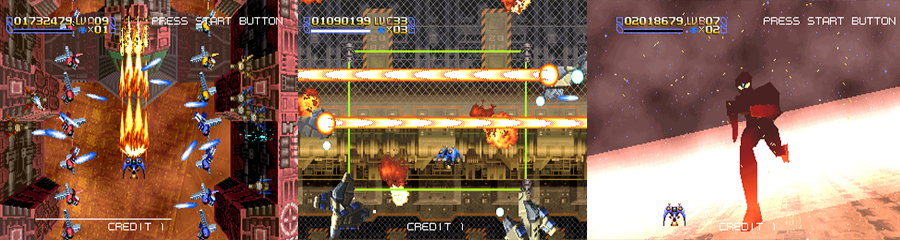
All of this leads into an amazing final boss encounter. It’s an empty void with a giant humanoid, running around and somersaulting you. Bullets drop down at you in the form of Ice-Picks. The variations are out of control. The choir music in the background gives off a feeling of epic proportions. This battle is intense, with the camera swinging alongside the boss. It is often confusing as the bullets don’t move along the same path, needing you at the peak of your ability. This game in particular was very ambitious for its time. It’s also one of the hardest Shmups out there. It really showed that Treasure loved to experiment with the genre. If you want a more advanced test of your skills, go boldly into Radiant Silvergun.
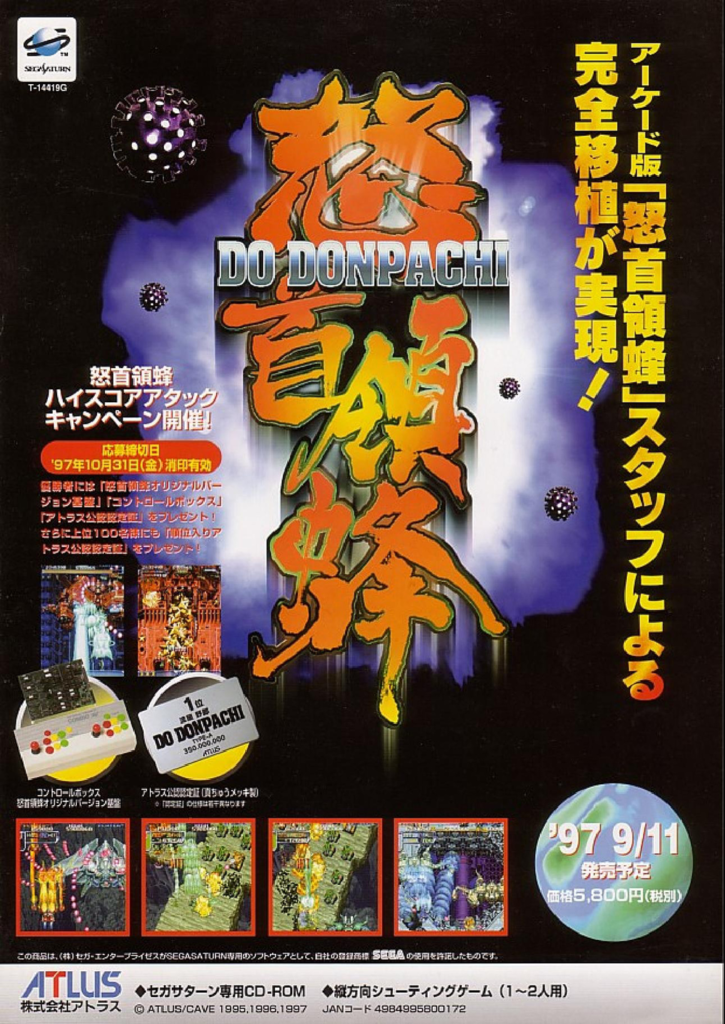
#4: DoDonPachi was a game developed by CAVE, a highly prolific Shmup developer from Japan. They are a specialist in the genre. Popular ones include: Mushihimesama, Death Smiles and Akai Katana, just to name a few. And what CAVE really excelled at, was the sub-genre known as “Bullet Hell.” This earned its nickname due to the insane amount of bullets on the screen at any given time. These games usually had a slowdown. DoDonPachi no exception. This occurred either through hardware or design. I played this one on MAME, but PlayStation and Saturn versions exist.
In DoDonPachi, or just most CAVE games really, you navigate through constant streams of bullet patterns (or “waves”). These waves can be seen as small pathways. Besides looking colorful and aesthetically pleasing, navigating through these is a tough challenge. The game gives you a small hit-box for that particular reason. It is simply a necessity, as you will move through a literal full screen of bullets. You can easily lose track of your ship.
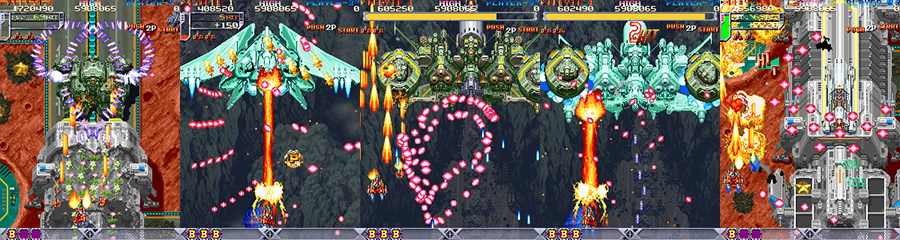
A deceptively simple mechanic reveals surprising depth. Tapping the fire button unleashes quick bursts. This allows fast movement across the screen. Holding it down transforms your ship into a slower, more precise instrument of destruction. It fires a focused laser stream. You learn to master the tricky balance between darting through bullet patterns and slowing down to thread the needle. Once you understand, it clicks. It’s a sensation that’s hard to forget. The bosses in this game are a highlight, consisting of multiple rounds of choreographed waves of bullets. Nothing beats the feeling of successfully navigating through a ridiculous amount of on-screen projectiles and getting away with it.
If you take the time, you will get used to the almost seizure-inducing patterns in general. If you show off one of these Bullet Hells to a casual viewer, they will think you’re insane. They will be amazed you can even accomplish such a task. However, the reality is that it heavily relies on muscle memory. Some skill and the general tactics of handling your ship also play a role, of course. The more Shmups you play, the more your overlapping skills grow. In any case, this game was a highlight for the Bullet Hell sub-genre. It remains widely popular today, and it is still getting sequels. I recommend this game for the pure potential adrenaline rush it can create. Beware, Bullet Hell games can become addicting once you master them.
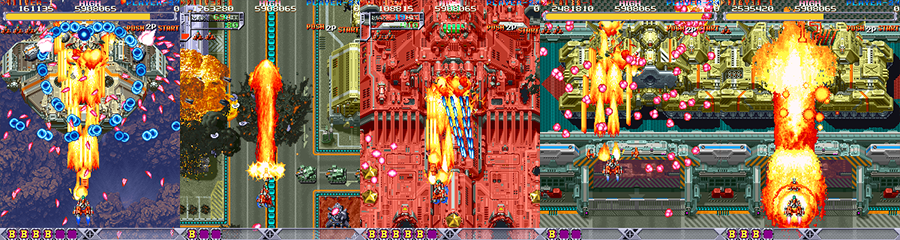
The above-mentioned Shmups are the ones I have mostly replayed over the years. I always come back to them. They are the immediate ones I would recommend checking out. However, there are so many great games in the genre, I couldn’t possibly compile an entire list. Some notable ones are Battle Garegga, Viper Phase 1, Battle Bakraid, ESPGaluda II and Gradius V. More recent ones include Jamestown, Zero Ranger, and Sol Cresta (made by Platinum Games, in fact). Show a list to a Shmup fanatic and they will be offended you left their favorite one out. There are so many, and to each its own. This article is just a teeny-tiny glimpse into the abyss of the Shmup genre.
Recently, a company called M2 released a brand of re-releases called ShotTriggers. These are extremely good, and the best way to experience some classics such as: Battle Garegga, Dangun Feveron and Ketsui. However, these are not on European stores. I got them using a VPN, though. And speaking of Europe, this finally brings me to the #5 on my list.
The case of Raiden Fighters Aces
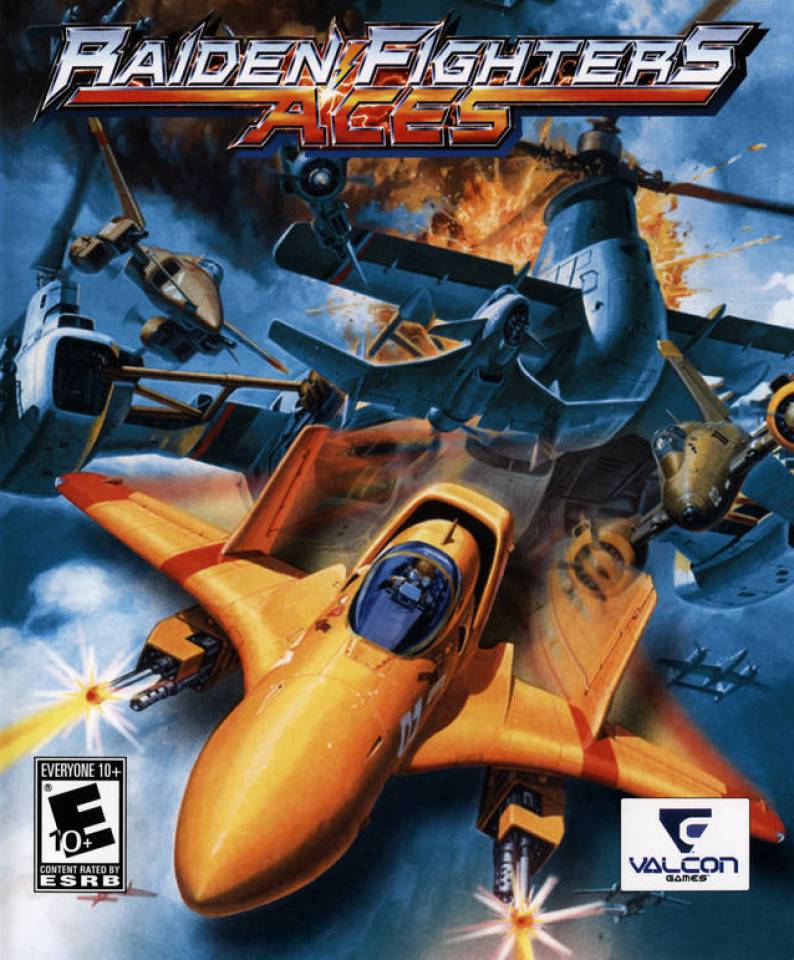
#5: Raiden Fighters Aces – the Shmup I have the most history with besides Super Aleste. The bane of my Shmup existence. The history between me and this game had its 17th anniversary not too long ago. There hasn’t been a single game release that has aggrevated and followed me throughout my life more than this one. And not because it’s a bad game. No, in fact, it’s absolutely amazing. This game is the European Shmup situation in a nutshell. But I will get back on this topic in a moment. For now, I want to focus on the game itself.
Raiden Fighters Aces is a collection that consists of Arcade ported versions of Raiden Fighters, Raiden Fighters II and Raiden Fighters Jet. It was ported in 2008 to the Xbox 360 and is the epitome of everything I love about the genre. It is extremely fast-paced. There are a lot of jets to choose from, in various pattern or speed combinations. The game has a very high difficulty level. The stakes are high. It doesn’t mess around with gimmicks. The sprites are gorgeous, and the over-the-top electronic soundtrack will drive your neighbors up the wall.
The highlight is the Boss Battle levels. These are HUGE battleships (or trains, etc.) stretched out over entire levels. The boss is the level. The camera moves frantically over the entire stage. You barely have enough time to keep up and to shoot all the little turrets that pop up. They are activated by proximity, and all aimed at you. Enemies pop up left, right, and center. Meanwhile, a thumping bass line makes your palms sweat. All this accumulates to the final portion of the stage, which exposes the core of the Boss. The insanity of the soundtrack reaches new heights, as you dodge the bullet patterns – almost faster than light. Did you just dodge that? Yes you did – and now you are now at maximum hype. The pounding heart-beat rhythm pushes you to aim for a 100% hit rate. This confirms that you have what it takes. The entire screen explodes as the Boss falls into the abyss.
YES.
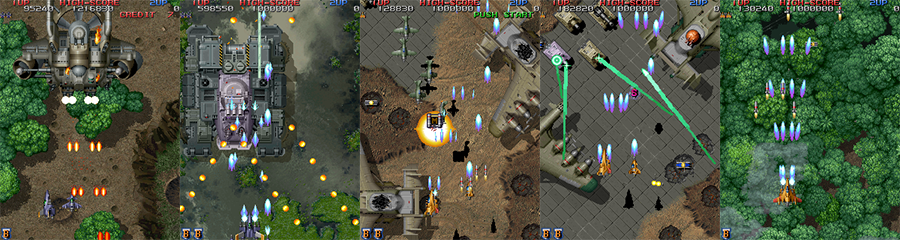
There are seven stages, randomly assigned each play-through, unless you want to do a “fixed” run. All but the final stage randomizes, allowing for more variety in each subsequent run. Raiden Fighters 2 and Fighters Jet, are more of the same. Which is exactly what you want. What a great collection of games. This is arguably my favorite collection of Shmups. And my most replayed ones for sure — on MAME that is. Because it was region-locked and never released in Europe.
This was especially annoying. I bought plenty of Xbox 360 Shmups, such as Deathsmiles, Akai Katana, and DoDonPachi. A few other ones I got were USA (NTSC) releases, and they all worked without any problems. However, my favorite of the bunch, Raiden Fighters Aces, was region-locked. This meant that there was no way to play it on my European (PAL) Xbox 360. I held my hopes up high for years. At times, I read that, yes, a PAL release of Raiden Fighters Aces was finally coming. Yet, it never came. It was released digitally on the Xbox Live Store. Yet, I couldn’t purchase it because I was from Europe, and that was the wrong region. Pesky Europeans. This version was later de-listed and forever blew my chances of ever obtaining it in digital form. I found out much later that it might have been possible with a VPN and some clever home address trick. This could have secured it into my account forever. It was never backwards compatible, so I could have possibly enjoyed it digitally. Buying the game’s retail release made no sense, since my Xbox 360 couldn’t play it. What I should have done to play the retail version, was buy an NTSC Xbox 360. However, adding that on top of the game’s price, it would’ve set me back a couple of hundred euros. Seeing as this was my only use case for getting one, I deemed the console not worth the cost.
Then, in 2013, the Steam and GOG version came along, released as the Raiden Legacy Collection. Surely this was the official port I had been waiting for? I could play them on MAME, sure, but this was an official release! Well – it was Raiden Fighters Aces, alright. Except shit. It was, in fact, the most garbage port imaginable. The menu was poorly coded, as it took 30 seconds to load each option, which made it unbearable. What other game can you think of that has an unbearable main menu? Seeing as this was a shitty Android port, I guess there were some compatibility issues that they never fixed. Keywords here: “Never” and “Fixed”. And on top of a bad frame rate, there was input lag. Moving left or right was met with delay. This is obviously the death knell of any Shmup – controls need to be utterly and totally precise. In fact, I’m sure you can find my rage post on this on the Steam Discussion Forums surrounding this game. This was a backwards-assed, cheap, unnecessarily bad, and completely incompetent port. How hard is it to port three (decades old) Arcade games that ran on potato hardware to a modern PC? Any half-decent developer could’ve slept their way into victory with this one, but it seems Dot-emu didn’t give a shit. They just slapped it together haphazardly and released it without second thought and without any form of future patch support. It’s a completely broken release of a game that I desperately wanted to play without any emulation involved. One that I have wanted to do so for years by now. This ‘release’ just poured extra salt into the festering wound called Raiden Fighters Aces. If only I could just play it on a real Xbox 360 instead.
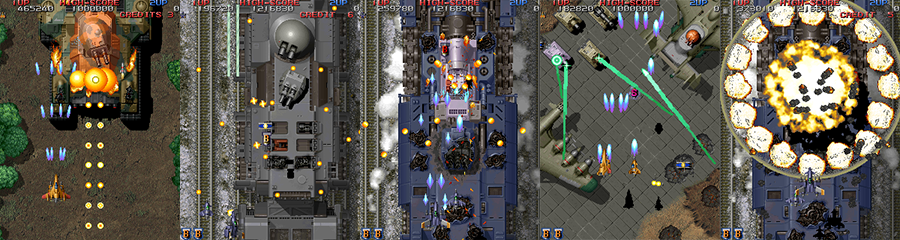
Eventually I did buy the retail disc version, but out of spite. “Maybe it will work anyway”. My optimistic brain, stronger than common sense. A full-priced disc that I cannot play is currently sitting on a shelf between all my other Xbox 360 games. And when I insert this disc it says: “Wrong Region lol” and kicks me back to the dashboard. Like dodging a relentless bullet hell, only to realize the final boss’s true form was heartbreak itself.
It was infuriating. Even though I knew exactly what to expect. And I could play them on MAME anyway. But that is not my problem. My problem is the following. When I want something done, it has to be done, and I cannot stop until I have done it. If I want to play a game on a specific system, I must play it on a specific system. I want to get the achievements on my Xbox gamer profile. I want to play the best Arcade port there is. Why? Is it stubbornness? Is it autism? What is it? — Is it wrong? I don’t know what to do about this, but there is no exception. And so I found and bought a JTAG Xbox 360 – a hardware modded version of the console. Region-free. And after mere seconds of plugging it in, I threw the disc in the tray at the speed of light. And guess what — Wrong Region. Holy shit, why!? I found out later that it had to do with something called “region spoofing”. This was a setting, so I changed it, and booted the game up once again. Something else happened. It was loading. My eyes were open as wide as possible. I was met with the following (so appropriate it made me laugh out loud) splash screen: SUCCESS.
It sure felt like a huge success, because there it was. The main menu, with the insane electro soundtrack thumping out of my speakers. I finally did it! However, it was not completely satisfying. I would’ve enjoyed playing it more on my own (original) console, obviously. I wanted to get the achievements on my own profile. But this was the best I could do, and probably could do forever, unless I would fork over for an NTSC 360. I didn’t want to risk my Xbox profile for that. A MAME and a JTAG version of Raiden Fighters Aces. Both were the real deal, but as to my preferred setup, this was all I was going to get.
Until about a few months ago, i found out, they announced: Raiden Fighters: Remix Collection. Is it what I think it is? Yes. It is. A modern port of Raiden Fighters Aces, scheduled to release in 2025. Maybe my Youtube comments and direct e-mails to Moss paid off. They haven’t announced the consoles yet. For some reason, the Xbox Series X often gets shafted with Shmup releases. Or Europe. That is still going on as well. I guess for both, the install base isn’t big enough. But it’s the console I want to play it on. The Switch and PlayStation 5 versions are a sure-fire release. No Xbox release seems like a big possibility. I’d have to hold my breath and wait until the final console release announcement. Will it come out on the Xbox, the console I always wanted to play it on? Will fate finally be kind to me? I have both a Switch and a PlayStation 5, but that’s not the point. For 17 years, I wanted to play this game on an Xbox. A game that my fellow NTSC brethren could enjoy without problems. It started with the Xbox 360. Then it went on to the Xbox One, S and X. Now, my hope was for the Xbox Series X to put me out of my misery. If for some miracle it does release on the Series X, I’ll shit my pants. Deliberately. But all in all – I just hope it’s a good console port, like the Xbox 360 version was. That’s what I really want. Sure, I want to get the Achievements on my Xbox gamer profile. But I’ll settle for a PlayStation 5 version. It’s not the end of the world. “First world problems“, some might say. I say shut up.
Wrapping Things Up
Well, I’ve poured as much as I can into this article. Up to the point that I’m now tired of the word Shmup. Let’s bring this to a close.
If you’re interested in the genre beyond the scope of this article, I would recommend to check out the “Top 25 Shmups of All Time” list on shmup.system11.org – As with any genre, it got over-saturated completely. So my advice: stick to the documented classics if you want to have a great time. A lot of great Shmups have gotten a home console or digital re-release. Everywhere you look, there is a great Shmup. You can buy them on a Steam sale and run through them once. Or get Radiant Silvergun on the Sega Saturn for $200 and become an expert.
The point is – have fun, and as the kids say: ‘git gud’. And once Raiden Fighters: Remix Collection is released, look for DrMatta on the leaderboards.
THE END